Aubergine / eggplant in Arabic: باذنجان
🍆 بَاذِنْجَان
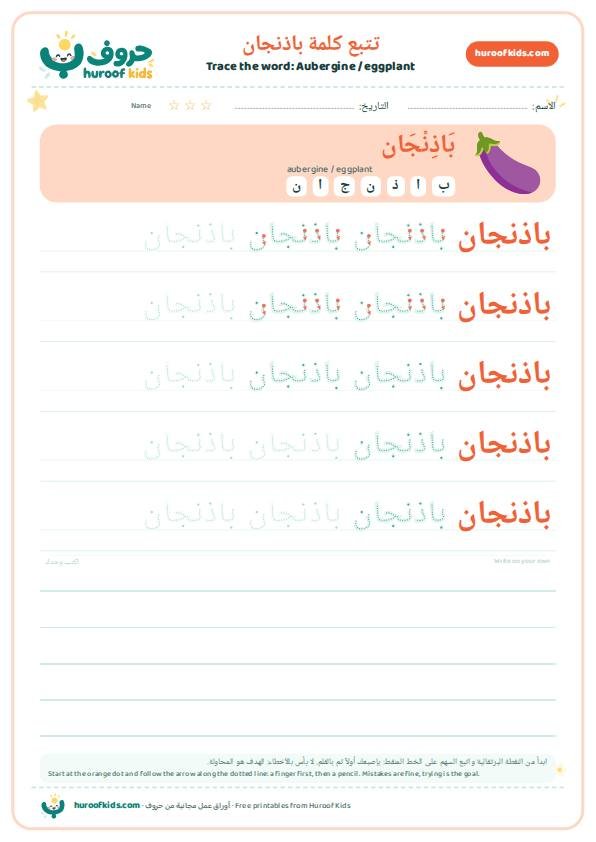
باذنجان means “aubergine / eggplant”. It has the letter Thaal (ذ) in the middle.
Learn to write باذنجان (aubergine / eggplant), an Arabic word with Thaal (ذ) in the middle. Picture, spelling and tracing rows. Free PDF.
⬇ Download free PDFWhat's on the sheet
- A picture 🍆 and بَاذِنْجَان with vowel marks
- Spelling, letter by letter: ب - ا - ذ - ن - ج - ا - ن
- Five tracing rows, then lines to write alone
How to use it
- Print on A4 (US Letter works too with "fit to page").
- Say the letter or word aloud together.
- Start at the orange dot and follow the arrow along the single dotted line, with a finger first, then a pencil. Arrows guide the first two tries, then fade away.
- Celebrate every finished row and colour the stars at the top.
About the letter: ذ
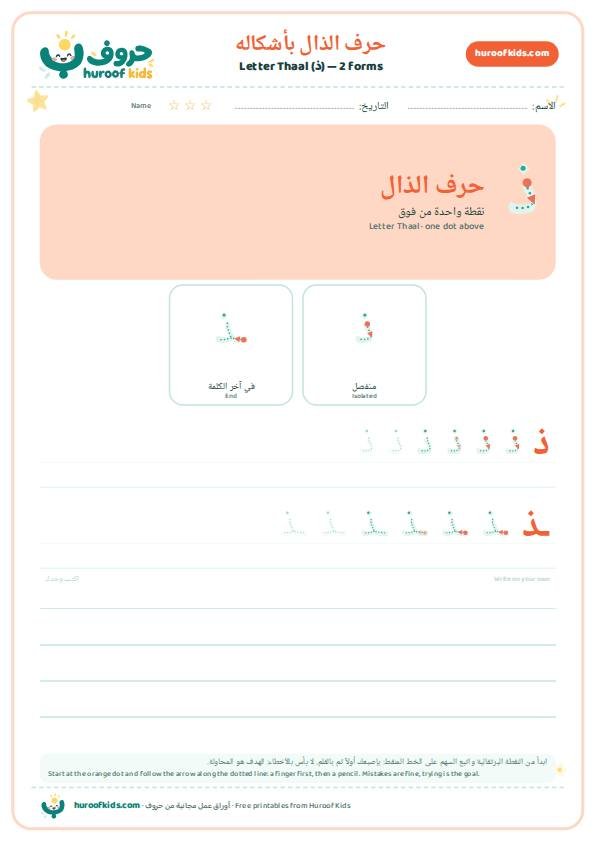
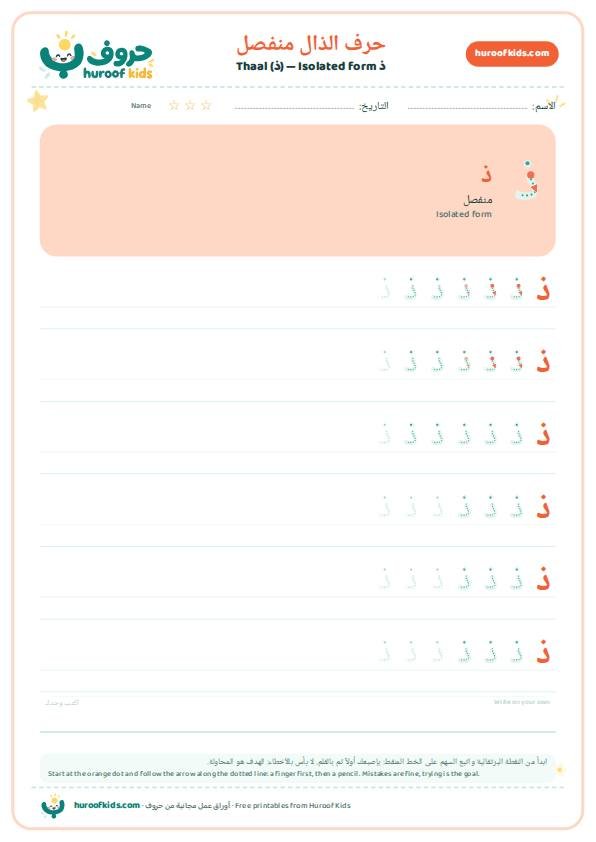
- Thaal (ذ) sounds like 'th' as in 'this'; it has one dot above.
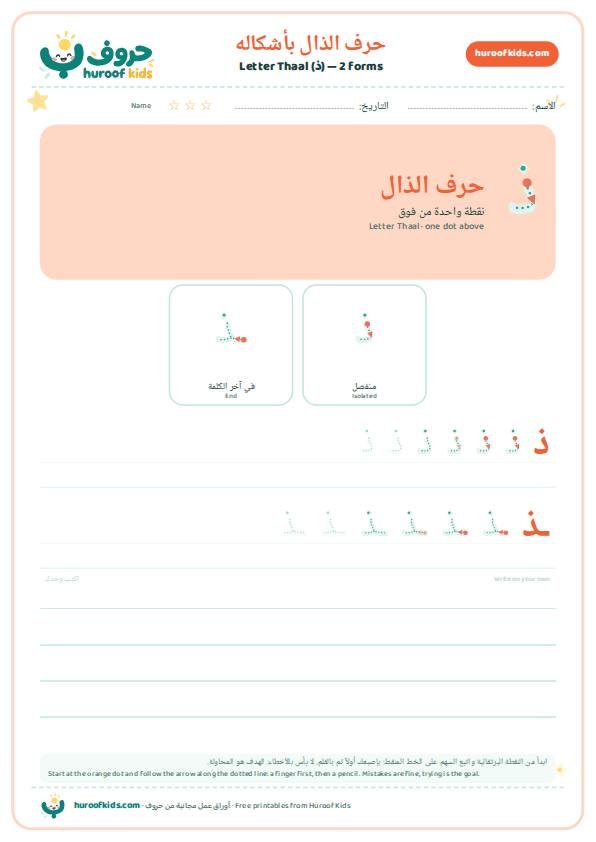
- It never joins the letter after it, so it has only two forms: ذ ـذ.
- It looks like Daal (د); the dots tell them apart.
- Also spelled: Thaal, Dhaal, Dhal, Zaal.
Related worksheets
 All Thaal sheets
 Letter forms
 Isolated ذ
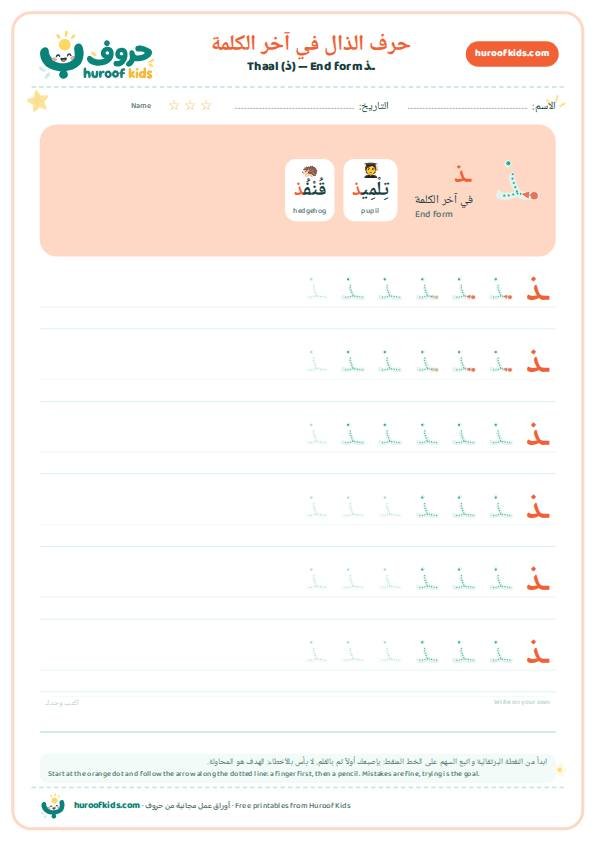 End ـذ
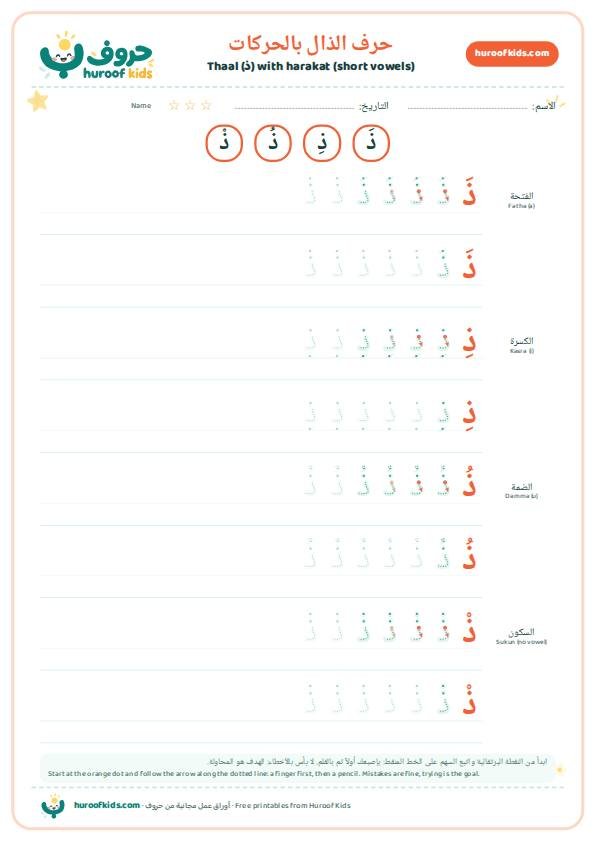 Harakat
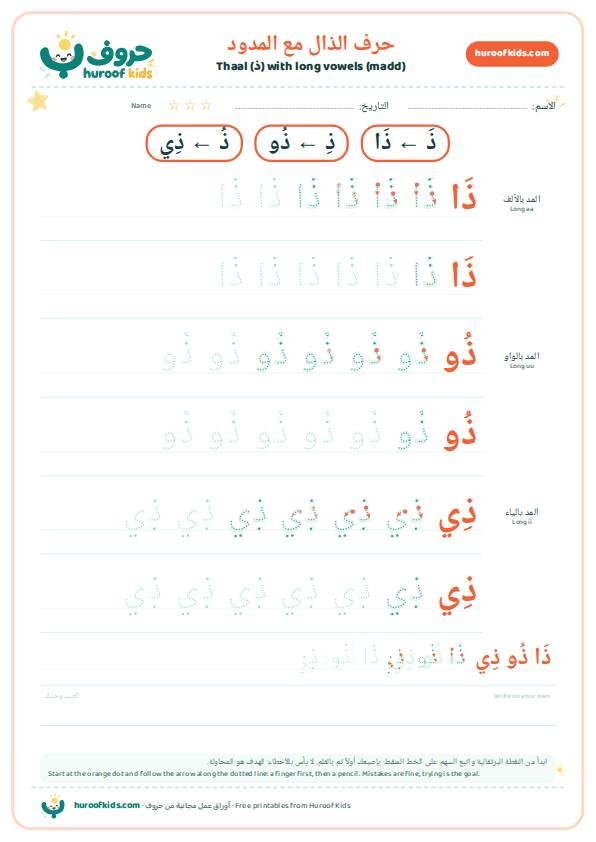 Long vowels
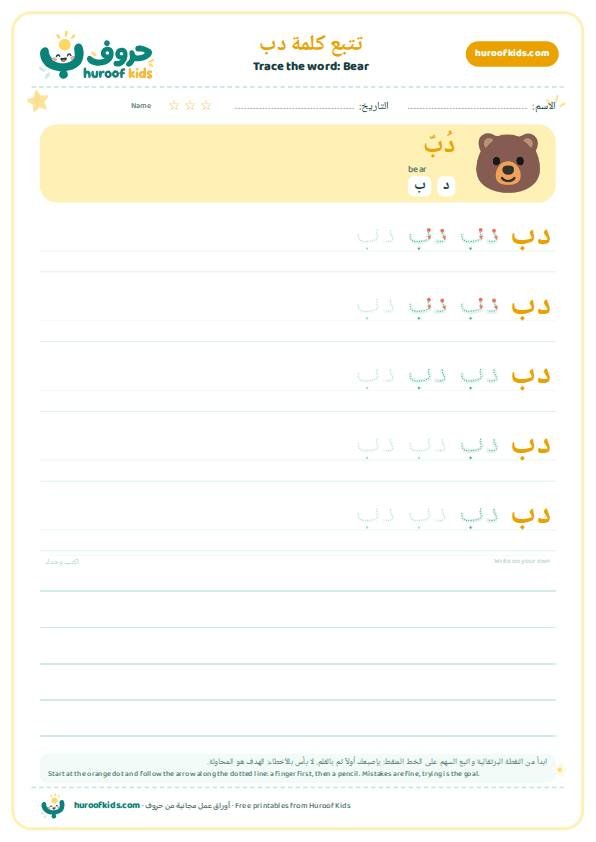 🐻 دب · bear
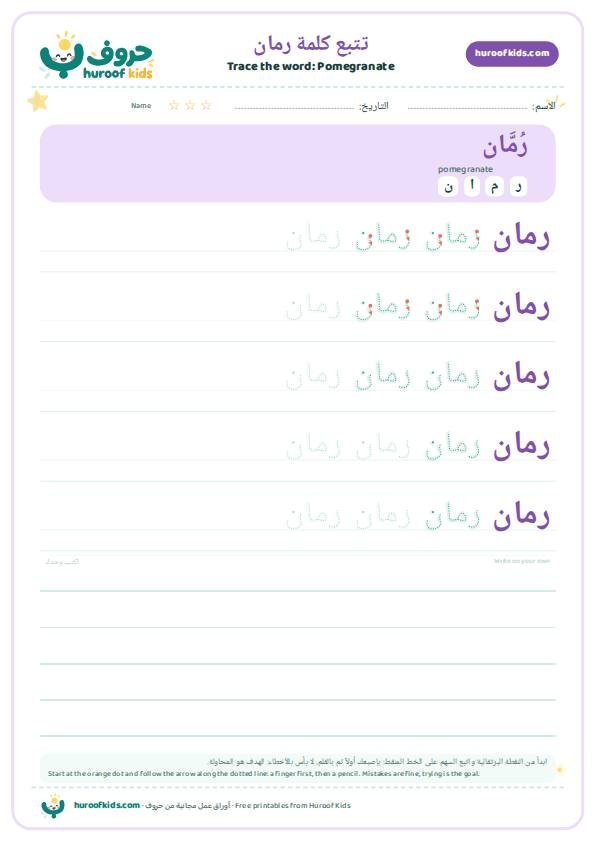 رمان · pomegranate
Questions parents ask
Are these worksheets free?
Yes. Every PDF on huroofkids.com is free for home and classroom use, with no sign-up.
What age are they for?
Ages 3–7: preschool, kindergarten (KG1, KG2), reception and Year 1 / Grade 1.
How many forms does Thaal have?
Only two, because it never joins the next letter: ذ ـذ.
How can my child tell ذ from د?
By the dots: ذ has one dot above; د has no dots.